
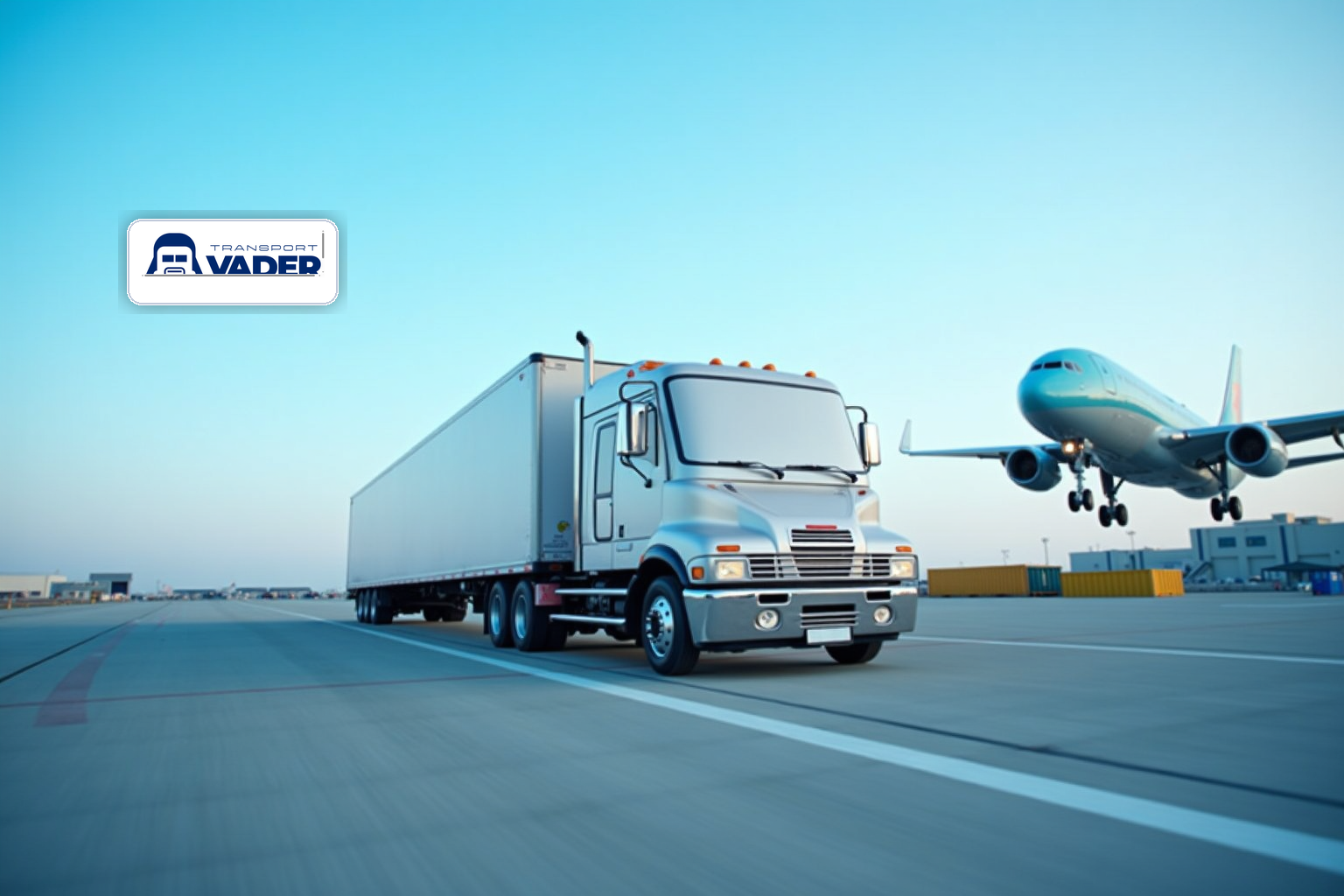
Expedited freight and air cargo come up in the same moment: standard transit will miss the window. That creates a common mistake. Teams default to air because it sounds faster, and treat expedited ground as the cheaper fallback. In real execution, that is not always how the move performs.
The real comparison is not truck versus plane. It is direct execution versus airport-dependent execution. A shipment can move by air and still lose time at tender cutoff, screening, transfer handling, airport recovery, local drayage, or final-mile scheduling. A ground expedited move can look slower on paper and still deliver earlier because it stays on one controlled route with fewer handoffs.
That difference matters when the load is tied to production recovery, a customer deadline, or an installation window that cannot move.
Why linehaul speed is not the same as delivery speed
Air cargo wins on linehaul speed. That part is obvious. Once freight is airborne, distance compresses quickly. But linehaul speed is only one part of total delivery time.
Shippers do not buy runway speed. They buy completed delivery within a usable window.
That is where urgent transportation decisions get distorted. A shipment routed through air still needs pickup, airport acceptance, security handling, unloading, cargo recovery, and local delivery at destination. Each step adds a timing dependency. If one handoff slips, the air move can lose the advantage that made it attractive in the first place.
Ground expedited works differently. The freight is assigned to dedicated equipment and moves with fewer handling points. That does not make it universally faster. It makes it more direct. For regional moves, same-day recoveries, and freight that must go from shipper to consignee without transfer complexity, that direct path often matters more than theoretical maximum speed.
This is why urgent freight decisions should be evaluated on total execution path, not mode prestige.
When expedited freight is often the better choice
Ground expedited usually makes more sense when the shipment needs control, minimal handling, and direct delivery. That is especially true in three situations.
First, the shipment is regional or within a one-day driving radius. In these cases, airport processing can consume time that a direct truck move avoids. The plane may be faster in the air, but the shipment still has to survive the rest of the chain.
Second, the freight is sensitive to handling. Parts, assemblies, custom components, or urgent replacement items often move better when they stay on one vehicle from pickup to delivery. Every extra handoff increases risk.
Third, the destination is not airport-friendly. If the final receiver still requires local delivery from the airport to a plant, warehouse, or jobsite, air adds one more leg that road expedited may eliminate.
There is also a practical compliance point. Direct ground service still operates under legal driving limits. Under the FMCSA Hours of Service summary, a property-carrying driver may drive up to 11 hours after 10 consecutive hours off duty and may not drive beyond the 14th hour after coming on duty. Those limits shape what a solo-driver recovery move can realistically do in one day, while team operations expand range on longer urgent moves. Source: FMCSA Hours of Service summary.
That matters because urgent ground is not infinite-speed transportation. It is controlled transportation within real legal and route constraints.
When air cargo is the stronger option
Air cargo becomes more attractive when the distance is long enough that road transit loses the deadline even under expedited handling. It also becomes stronger when the value of time exceeds the operational cost of airport handling.
Typical examples include cross-country emergency replenishment, highly time-compressed replacement freight, and shipments tied to shutdown events where even one extra day is too much. In those cases, the air premium may be easier to justify.
Air is also useful when the destination market has reliable airport handling and local recovery already arranged. The more organized that downstream process is, the more likely air will preserve its advantage.
But air is not automatically cleaner or simpler. It requires earlier planning inputs than many shippers expect. Piece count, dimensions, packaging readiness, dangerous-goods status, airport acceptance timing, and delivery recovery all have to line up. Air solves urgency well when the handoff chain is prepared. It becomes messy when the shipment is urgent but the execution around it is incomplete.
Where the cost difference really comes from
Shippers often compare expedited freight and air cargo as if one mode is expensive and the other is cheap. That framing hides the real issue. The cost difference usually comes from which operational burdens are being purchased.
With air cargo, the shipper is paying for high-speed linehaul plus airport-based handling infrastructure. The invoice reflects access to aircraft capacity, terminal processes, cutoffs, cargo handling, and destination recovery.
With ground expedited, the shipper is paying for dedicated vehicle control, direct routing, and reduced handling. The invoice reflects speed through simplification, not speed through airborne transit.
That distinction matters because some urgent shipments need raw distance compression and others need execution control.
If the freight is 1,200 miles away and the deadline is tomorrow morning, air may still be the right tool even at a premium. If the load is 250 miles away, ready now, and must get directly to a plant with no tolerance for transfer mistakes, expedited truck service may create a better outcome with less operational friction.
Expedited freight vs air cargo
| Decision factor | Expedited freight | Air cargo |
|---|---|---|
| Best fit distance | Regional to medium-haul urgent moves where direct road transit can still hit the deadline | Long-haul urgent moves where road cannot meet the required delivery window |
| Handling points | Usually fewer, often direct pickup to delivery | More handoffs, including airport acceptance and destination recovery |
| Shipment control | Higher control over route, vehicle, and communication | Higher dependence on airport process and handoff timing |
| Risk of delay outside linehaul | Traffic, route constraints, driver-hour limits | Tender cutoffs, screening, cargo recovery, local drayage timing |
| Cost structure | Premium paid for dedicated equipment and direct execution | Premium paid for airborne transit plus airport infrastructure |
| Best use case | Plant recovery, urgent regional delivery, freight that should stay on one vehicle | Cross-country critical shipment where speed gain outweighs handling complexity |
The table shows why the comparison should not be reduced to a single question about price. The stronger option is the one that protects the deadline with the least execution risk.
What operations teams should confirm before choosing
Before booking either mode, confirm five things:
- the real delivery window, not the preferred time
- whether the shipment is actually ready
- how many handoffs the freight can tolerate
- whether airport recovery is already planned
- what failure costs if this move still misses
For shippers comparing urgent options, the practical question is simple: does this shipment need the absolute fastest linehaul, or the most controlled end-to-end execution? In many urgent cases, that is the difference between choosing air and choosing a direct expedited move.
Teams that need a controlled road option can look at how expedited freight works in direct-delivery situations. If the issue is already active and the window is closing, the next step is to confirm the fastest workable recovery option.
If the shipment already needs recovery, confirm the fastest workable option.
Final takeaway
Air cargo is not automatically the better urgent solution. Expedited freight is not automatically the cheaper compromise.
The right choice depends on distance, handling tolerance, deadline severity, and how much execution complexity the shipment can absorb. Air is strongest when only major transit compression can save the shipment. Expedited ground is strongest when direct control and fewer handoffs protect the deadline better than airport routing.
That is the decision framework that actually reduces failure risk.
